Mornings are rushed, but your gut still likes a good start. These quick gut healthy breakfast recipes need 10 minutes or less of hands-on time and use simple ingredients from any grocery store.
Quick answer: A quick gut-healthy breakfast pairs fiber-rich foods like oats, chia seeds, fruit, beans, or whole-grain toast with an optional source of live cultures, like plain yogurt or kefir. Each needs 10 minutes or less of hands-on time. Add fiber slowly, drink water, and talk to a doctor if you have digestive problems.
You’ll see “gut healthy” on a lot of labels. We kept this guide simple and honest. Below, we explain what the term can reasonably mean, share seven full recipes with steps, and add easy swaps and a five-day plan. We also explain how to add fiber without upsetting your stomach.
Key Takeaways
- Gut-friendly breakfasts center on fiber. Live-culture foods like yogurt or kefir are optional.
- Each recipe takes 10 minutes or less of hands-on time.
- Add fiber slowly and drink water to avoid gas and bloating.
- “Gut healthy” is not a treatment. Check with a doctor if you have digestive symptoms.
What Makes a Breakfast Gut Healthy?
Fiber is the main player. Dietary fiber is the part of plant foods your body can’t digest. It travels to your colon, where gut bacteria use it for energy. (Mayo Clinic News Network) Eating many kinds of fiber-rich foods gives you many types of fiber, which is a good thing.
How much do you need? A Mayo Clinic dietitian says women under 50 should aim for at least 25 grams a day, women over 50 for 21, men under 50 for 38, and men over 50 for 30. She adds that the right breakfast can get you more than a quarter of the way there. (Mayo Clinic Minute)
Live cultures are an optional extra. The NIH describes probiotics as live microorganisms that give health benefits when you consume them, and notes that yogurt is made by adding live cultures to milk. But not every food or supplement labeled “probiotic” has proven benefits. (NIH Office of Dietary Supplements)
The same fact sheet says some fermented foods, like sourdough bread and most pickles, are processed after fermentation, which kills the microorganisms. So a pickle or a slice of sourdough is not a reliable source of live cultures.
What it can’t do. No breakfast fixes digestive disease, and evidence for many popular claims is limited. Think of these recipes as a tasty way to eat more fiber and plants, not as a treatment.
7 Quick Gut Healthy Breakfast Recipes
Each recipe makes one serving. Use any milk or plant milk you like. Always read labels if you have an allergy.
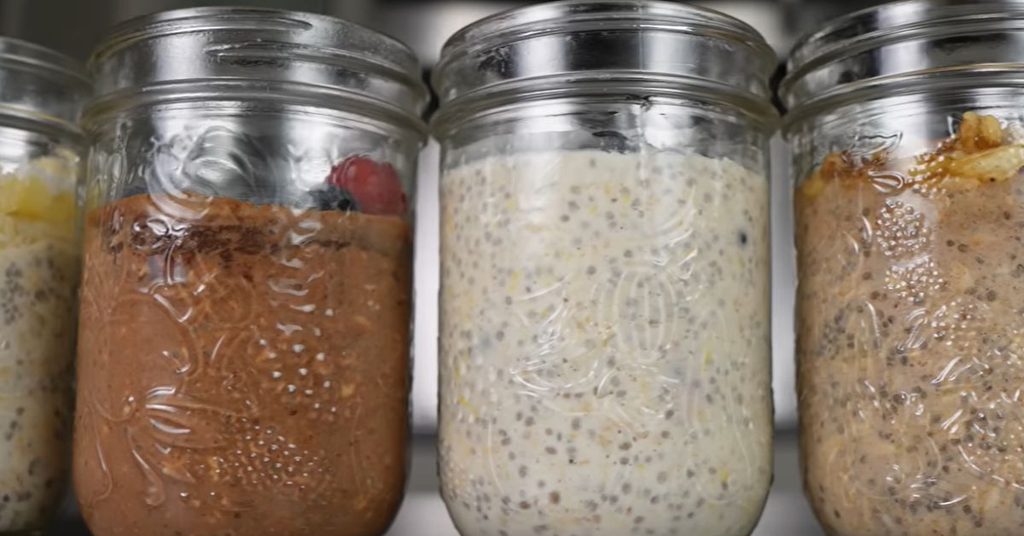
1. Overnight Chia-Oat Jar
Time: 5 minutes tonight, 0 minutes tomorrow.
Ingredients
- ½ cup rolled oats
- 1 tablespoon chia seeds
- ¾ cup milk or plant milk
- ¼ cup plain yogurt
- ½ teaspoon cinnamon
- ½ cup berries
Steps
- Stir the oats, chia, milk, yogurt, and cinnamon in a jar.
- Cover and refrigerate for at least six hours.
- Stir again, then top with berries. Eat cold, or warm it for one minute.
Tip: Stir once more after 10 minutes tonight so the chia doesn’t clump.
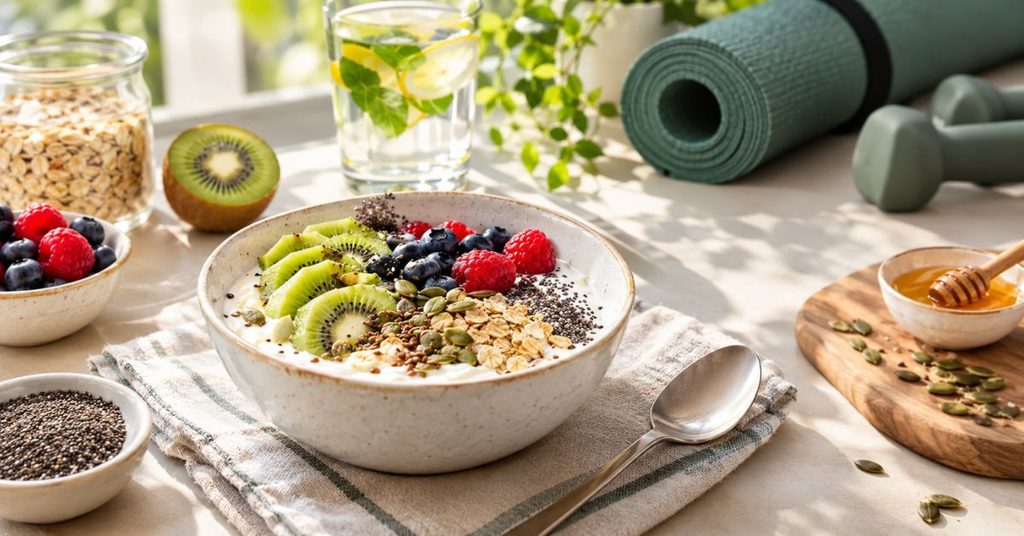
2. Yogurt, Kiwi, and Seed Bowl
Time: 5 minutes.
Ingredients
- ¾ cup plain yogurt (choose one that lists live cultures)
- 1 kiwi, peeled and diced
- 1 tablespoon pumpkin seeds
- 1 tablespoon ground flaxseed
- 2 tablespoons rolled oats for crunch (optional)
Steps
- Spoon the yogurt into a bowl.
- Top with kiwi, seeds, flaxseed, and oats.
- Add a small drizzle of honey only if you want it sweeter.
3. Banana-Kefir Smoothie
Time: 5 minutes.
Ingredients
- 1 ripe banana (frozen works well)
- ¾ cup plain kefir
- ¼ cup rolled oats
- 1 tablespoon ground flaxseed
- 1 tablespoon peanut butter
- A few ice cubes
Steps
- Add everything to a blender.
- Blend for about one minute until smooth.
- Add a splash of water if it’s too thick.
Tip: Sip it slowly instead of gulping. If your blender is weak, soak the oats in the kefir for five minutes first.
4. White Bean and Tomato Toast
Time: 7 minutes.
Ingredients
- 2 slices whole-grain bread
- ½ cup canned white beans, rinsed and drained
- 2 teaspoons olive oil
- 1 teaspoon lemon juice
- Pinch of salt and pepper
- 4 tomato slices and a handful of arugula or spinach
Steps
- Toast the bread.
- Mash the beans with the oil, lemon juice, salt, and pepper.
- Spread the beans on the toast and top with tomato and greens.
Note: Mayo Clinic notes that beans and lentils contain complex sugars that can cause gas and bloating, and suggests tofu, tempeh, or quinoa as easier options. (Mayo Clinic News Network) Start with a small portion and see how you feel.
5. Spinach and Egg Scramble
Time: 8 minutes.
Ingredients
- 2 eggs
- A large handful of baby spinach
- ¼ cup diced bell pepper or tomato
- 1 teaspoon olive oil
- Salt and pepper
- 1 slice whole-grain toast
Steps
- Heat the oil in a pan over medium heat. Cook the pepper for one to two minutes.
- Add the spinach and stir for 30 seconds until it wilts.
- Beat the eggs and pour them in. Stir gently for about two minutes until the eggs are fully set.
- Serve with the toast.
Tip: Eggs bring protein but almost no fiber, so the veggies and toast do the gut-friendly work here.

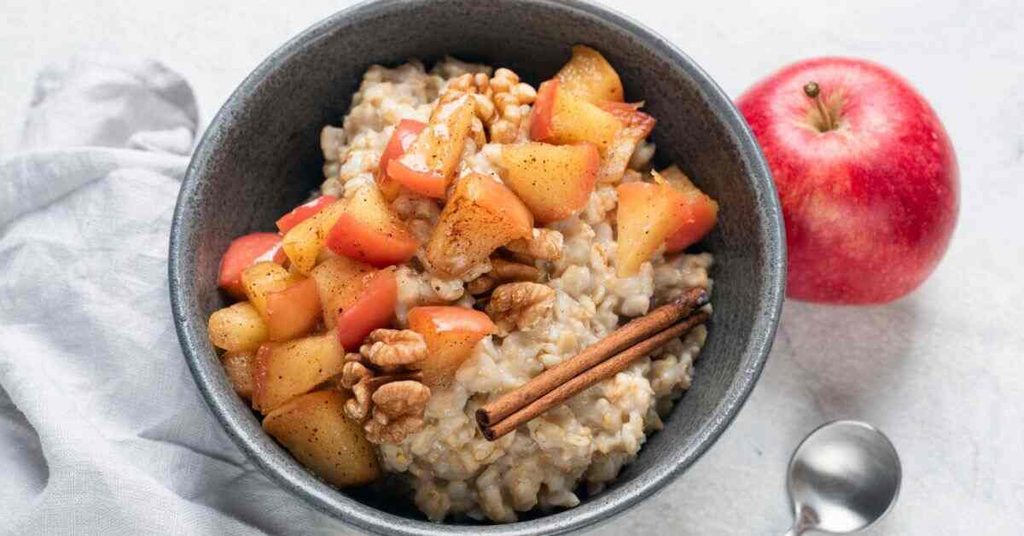
6. Warm Apple-Cinnamon Oats
Time: 5 minutes.
Ingredients
- ½ cup rolled oats
- 1 cup water or milk
- 1 small apple, diced (leave the skin on for extra fiber)
- ½ teaspoon cinnamon
- 1 tablespoon chopped walnuts
- 1 teaspoon chia seeds
Steps
- Add the oats, liquid, apple, and cinnamon to a large microwave-safe bowl. It bubbles up, so use more room than you think you need.
- Microwave for two to three minutes, stirring once halfway.
- Let it rest for one minute, then top with walnuts and chia.
Stove option: Simmer everything in a small pot for about five minutes.
7. Leftover Quinoa Breakfast Bowl
Time: 7 minutes.
Ingredients
- ¾ cup cooked quinoa
- ½ cup milk or plant milk
- ½ teaspoon cinnamon
- ½ banana, sliced, or ½ cup berries
- 1 tablespoon nut or seed butter
- 1 tablespoon seeds
Steps
- Warm the quinoa, milk, and cinnamon in the microwave for one to two minutes.
- Stir, then top with fruit, butter, and seeds.
Food safety: The USDA says to refrigerate leftovers within 2 hours of cooking, keep them for 3 to 4 days, and reheat them to 165°F. (USDA FSIS)
Easy Swaps for Different Diets
| If you need… | Try this swap |
| Dairy-free | Unsweetened soy, oat, or coconut yogurt and plant milk. Check the label if you want live cultures |
| Egg-free | Crumbled tofu in the scramble, or the white bean toast |
| Nut-free | Sunflower seed butter and pumpkin or sunflower seeds |
| Gluten-free | Certified gluten-free oats and bread |
| Lower sugar | Plain yogurt or kefir, with fruit for sweetness instead of honey |
A Sample 5-Day Quick Breakfast Plan
Prep the night before when you can. This plan keeps the variety high and the mornings easy.
| Day | Breakfast | Prep note |
| Monday | Overnight Chia-Oat Jar | Make it Sunday night |
| Tuesday | Yogurt, Kiwi, and Seed Bowl | Buy kiwi and seeds in advance |
| Wednesday | Spinach and Egg Scramble | Dice the veggies ahead |
| Thursday | Banana-Kefir Smoothie | Freeze banana slices |
| Friday | White Bean and Tomato Toast | Rinse and mash beans the night before |
| Weekend | Warm Apple-Cinnamon Oats or the Quinoa Bowl | Cook extra quinoa at dinner |
If you work out in the morning, this plan pairs well with a light pre-workout snack.
Tips for a Happier Gut in the Morning
- Add fiber slowly. Mayo Clinic suggests raising your fiber by about 3 grams a week instead of all at once, and drinking plenty of water. Too much, too fast, can cause gas and bloating.
- Pick food over supplements. The same Mayo Clinic source says fiber is best taken from food rather than supplements.
- Mix your plants. Rotate oats, chia, fruit, beans, and whole grains through the week.
- Choose plain yogurt or kefir. You control the sweetness with fruit instead of added sugar.
- Store leftovers safely. Cool them within two hours and eat them within four days.
- Know when to ask for help. Mayo Clinic advises talking to a healthcare provider if bloating, gas, or abdominal discomfort continues. That’s especially true if you have a condition like IBS, IBD, or celiac disease.
Common Mistakes to Avoid
- Jumping to a high-fiber diet overnight. Build up over a few weeks.
- Skipping water. Fiber needs fluid to move well.
- Trusting “probiotic” labels blindly. As the NIH notes, not all products labeled probiotic have proven benefits.
- Choosing sugary flavored yogurts. Plain with fruit works just as well.
- Changing everything at once. Try one new recipe at a time, so you know what suits you.
- Expecting a cure. These recipes support a balanced diet. They don’t treat medical conditions.
FAQs
It’s a breakfast built around fiber-rich plant foods, such as oats, chia, fruit, beans, or whole grains, that takes about 10 minutes or less of hands-on time. Some people add plain yogurt or kefir for live cultures.
No. The NIH says probiotics are live microorganisms with proven benefits only when specific strains are studied, and not every labeled product has that proof. Yogurt and kefir are optional, not required.
Mayo Clinic suggests at least 25 grams a day for women under 50 and 38 grams for men under 50, with lower goals after 50. Build up slowly and drink water.
We can’t give medical advice. Fiber can cause gas at first. If you have IBS, IBD, celiac disease, or ongoing bloating or pain, talk to a healthcare provider before changing your diet.
Yes. The overnight jar and quinoa bowl work well. The USDA says to refrigerate leftovers within two hours and eat them within three to four days. Make smoothies fresh each morning.
Conclusion
Quick gut healthy breakfast recipes don’t need special ingredients or lots of time. Start with one or two recipes that fit your mornings, add fiber slowly, and drink water through the day. Small, steady changes add up. For more simple food ideas, explore our Weight Loss & Nutrition category.
Sources
- Mayo Clinic News Network, Mayo Clinic Q&A: Why Is Fiber Good for Your Overall Health?
- Mayo Clinic News Network, Mayo Clinic Minute: The Importance of Dietary Fiber
- Mayo Clinic News Network, Mayo Clinic Q&A: Foods to Reduce Bloating
- NIH Office of Dietary Supplements, Probiotics: Fact Sheet for Consumers
- USDA Food Safety and Inspection Service, Leftovers and Food Safety
Disclaimer: This article is for informational purposes only and is not a substitute for professional medical advice, diagnosis, or treatment. Always consult a qualified healthcare provider before making changes to your diet, exercise routine, or health regimen. Read our full Medical Disclaimer for more details.
Written by the CleanLiveHealth Team.
