You don’t need a gym to get stronger. With a few fitness boot camp exercises and a clear patch of floor, you can train your whole body at home.
Quick answer: Fitness boot camp exercises mix cardio, strength, and core moves into short circuits. At home, you can use bodyweight moves like squats, push-ups, lunges, planks, and jumping jacks. Do each move for 30 to 40 seconds, rest briefly, and repeat for a few rounds. Start slowly, focus on form, and add rounds over time.
Boot camp workouts have a reputation for being loud and tough. At home, they feel very different. You set the pace, pick the moves, and rest when you need to. Below, we share ten moves, easy ways to make each one easier or harder, and two ready-to-use workouts.
What Is a Fitness Boot Camp Workout?
A boot camp workout is a circuit. You move from one exercise to the next with short breaks between them. Most circuits mix three things: cardio to raise your heart rate, strength moves to challenge your muscles, and core work to steady your middle.
Many boot camp sessions also run on a timer. You work hard for a set time, then rest. That pattern keeps workouts short and keeps you moving.
Our “Balanced Round” method: Instead of tossing random moves together, build each round from five groups. Pick one cardio move, one leg move, one push move, one move for the back of your body (glutes and hamstrings), and one core move. This stops any single muscle from doing all the work. The ten exercises below fit these five groups, so you can mix and match.
Benefits of Boot Camp Workouts: What Research Says
Studies on “boot camp” as a named class are limited. So we lean on what major health agencies say about the kinds of activity a boot camp includes: cardio, strength work, and intervals.
- Better mood, sleep, and daily function. The CDC says physical activity helps you feel better, function better, and sleep better.
- Strength for everyday life. Adults need at least 150 minutes of moderate activity a week, plus muscle-strengthening activity on 2 days. Squats, lunges, and push-ups train big muscle groups, so they can help you reach that strength goal.
- A time-friendly routine. Mayo Clinic describes interval training as a way to fit in fitness, and notes that new exercisers in one study preferred it to steady cardio. Boot camp circuits often use a similar work-and-rest pattern.
You may also see claims that boot camp “melts fat” or boosts your metabolism for hours. Evidence for big effects like these is limited, and results vary from person to person. Think of boot camp as one useful tool alongside good sleep, balanced meals, and daily movement.
Before You Start: Warm-Up and Safety Checks
Talk to your doctor if needed. Mayo Clinic advises talking to your doctor before a major change in your exercise routine, starting gradually, and scheduling recovery days. The CDC notes that moderate-effort activity is safe for most people. Boot camp can feel harder than a walk, so check in first if you have a heart or lung condition, joint trouble, an injury, or a pregnancy, or if you’re returning after a long break.
Set up your space. Clear enough floor to lie down with your arms stretched out. Wear supportive shoes, grab a mat for comfort, and keep water nearby. A phone timer works well for the work and rest periods.
Use the talk test. During moderate activity, you can talk but not sing. During vigorous activity, you can say only a few words before needing a breath. Aim for “hard but doable” during work periods. During rest, wait until you can speak in full sentences again.
Warm up for five minutes. A Mayo Clinic sports medicine doctor says stretching cold muscles before exercise can raise injury rates, and suggests a dynamic warm-up such as running in place, jumping jacks, or leg lifts instead. Try this simple routine:
- March in place for 1 minute.
- Do arm circles and shoulder rolls for 1 minute.
- Do slow bodyweight squats for 1 minute.
- Swing each leg gently forward and back for 30 seconds.
- Do easy step jacks for 1 minute.
10 Fitness Boot Camp Exercises You Can Do at Home
Every move here needs only your body weight. Work for 30 to 40 seconds per move, or aim for a steady number of clean reps. Form always comes before speed.
Cardio Moves
1. Jumping Jacks
Works: heart, legs, shoulders.
Stand tall with your feet together. Jump your feet wide as your arms sweep overhead, then jump back.
Easier: Step one foot out at a time (step jacks). Harder: Add a small squat each time your feet land wide.
2. High Knees
Works: heart, hips, core.
Run in place and lift your knees toward hip height. Pump your arms and land softly on the balls of your feet.
Easier: March instead of running. Harder: Speed up while keeping your chest tall.
3. Step-Back Burpee
Works: full body.
Squat down and place your hands on the floor. Step your feet back into a plank, step them forward again, then stand up.
Easier: Skip the stand-up reach and move slowly. Harder: Add a small jump at the top. Skip the jump if you’re new, since this is the most demanding move on the list.
Strength Moves
4. Bodyweight Squat
Works: thighs and glutes.
Place your feet a little wider than your hips. Push your hips back and bend your knees as if sitting in a chair. Keep your chest up and your heels down, then stand tall.
Easier: Squat down to a chair and stand back up. Harder: Lower for three slow seconds.
5. Reverse Lunge
Works: thighs, glutes, balance.
Step one foot back and lower until both knees bend about 90 degrees. Push through your front heel to stand, then switch legs.
Easier: Hold a wall or chair and take a smaller step. Harder: Pause for two seconds at the bottom.
6. Push-Up
Works: chest, shoulders, arms, core.
Place your hands under your shoulders and keep a straight line through your body. Lower your chest toward the floor, then press back up.
Easier: Lie on your back with your legs together. Fix your gaze on a sturdy counter or table. Harder: Lower for three slow seconds.
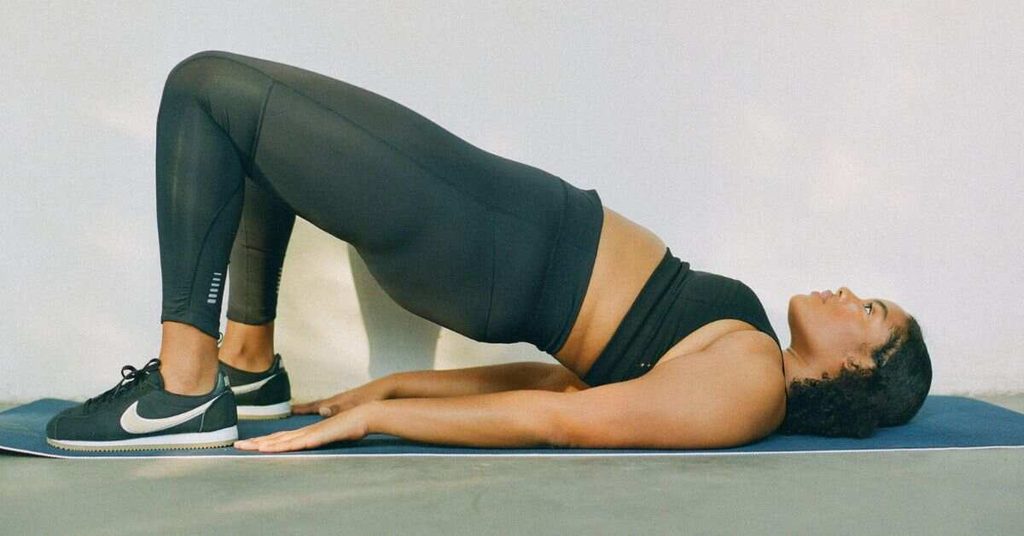
7. Glute Bridge
Works: glutes, hamstrings, lower back.
The best position is lying on your back with your knees bent and feet flat on the ground. Press through your heels to lift your hips until your shoulders, hips, and knees form a line. Squeeze, then lower slowly.
Easier: Lift your hips only part of the way. Harder: Lift one foot off the floor and bridge with the other leg.
Core and Balance Moves
8. Mountain Climber
Works: core, shoulders, heart.
Start in a high plank. Start by driving one knee toward your chest and then switch to the other. Keep your hips level.
Easier: Place your hands on a counter and move slowly. Harder: Speed up while keeping your hips still.
9. Forearm Plank
Works: core, shoulders, glutes.
Place your elbows under your shoulders and make a straight line from head to heels. Tighten your belly and keep breathing.
Easier: Drop to your knees. Harder: Lift one foot for a second at a time, then switch.
10. Bird Dog
Works: core, back, balance.
Start on your hands and knees. Reach your right arm forward and your left leg back, keeping your hips level. Pause, then switch sides.
Easier: Lift only an arm or only a leg. Harder: Pause for three seconds each rep.
Two Sample Boot Camp Workouts
Use a timer. Warm up first, and rest about one minute between rounds. Both workouts follow the Balanced Round method, so every round covers your whole body.
Beginner Circuit (about 20 minutes, 3 rounds)
Work 30 seconds, rest 30 seconds.
| Order | Move | Group |
| 1 | Step jacks | Cardio |
| 2 | Bodyweight squat | Legs |
| 3 | Incline or knee push-up | Push |
| 4 | Glute bridge | Back of body |
| 5 | Forearm plank (knees down is fine) | Core |
| 6 | Bird dog | Core and balance |
Intermediate Circuit (about 25 minutes, 3 rounds)
Work 40 seconds, rest 20 seconds.
| Order | Move | Group |
| 1 | Jumping jacks | Cardio |
| 2 | Bodyweight squat | Legs |
| 3 | Push-up | Push |
| 4 | High knees | Cardio |
| 5 | Reverse lunge | Legs |
| 6 | Mountain climber | Core |
| 7 | Glute bridge | Back of body |
| 8 | Forearm plank | Core |
Once this feels easy, add step-back burpees as a short finisher. Move up one level only when you finish each round with good form.
Fitting it into your week. A simple layout can look like this:
| Day | Plan |
| Monday | Boot camp workout |
| Tuesday | Brisk walk or easy movement |
| Wednesday | Rest or gentle stretching |
| Thursday | Boot camp workout |
| Friday | Brisk walk or easy movement |
| Saturday | Optional third session or a longer walk |
| Sunday | Rest |
This plan builds in two strength days and leaves room for recovery. You can add longer walks or a third session to work toward the CDC’s 150-minute weekly goal.
Cool-Down and Recovery
End each session with about five minutes of slow marching or easy walking until your breathing settles. Then stretch while your muscles are still warm. The same Mayo Clinic doctor says regular stretching after a workout, when muscles are warm, can improve flexibility and lower injury risk over time.
Try these four stretches, holding each for about 30 seconds:
- Standing quad stretch (each leg)
- Standing hamstring stretch (each leg)
- Chest and shoulder stretch with your hands clasped behind your back
- Child’s pose
It is common for your muscles to feel sore for the first day or two after starting. Sharp pain, dizziness, or chest discomfort is not normal. Stop right away and get medical help if you notice those. Drink water, sleep well, and give your muscles a rest day before the next hard session.
Common Mistakes to Avoid
- Rushing your reps. Fast, sloppy moves train poor habits. Slow down and own each rep.
- Going all out every time. Hard work needs recovery. Save your top effort for one or two moves, not the whole session.
- Skipping the warm-up. Five minutes is enough to get your muscles ready.
- Skipping rest days. Strength builds while you recover, not only while you train.
- Holding your breath. Breathe out on the hard part of each move.
- Copying advanced workouts. Online routines often show experienced athletes. Start with the beginner circuit, even if it feels easy.
FAQs
HIIT alternates intense bursts of activity with time to recover. Boot camp is a broader style that mixes cardio, strength, and core moves in circuits. A boot camp session can use HIIT-style timing, but it doesn’t have to.
Yes. Squats, lunges, push-ups, planks, and jumping jacks need only your body weight. Use a mat for comfort and a sturdy chair or counter for easier versions. To make moves harder, slow down your reps or add a round before you buy any gear.
The CDC recommends muscle-strengthening activity on at least 2 days each week. Many beginners start with two non-consecutive days. Mayo Clinic also advises scheduling recovery days between harder interval sessions. Add a third day only when you recover well.
They can be, if you start gradually and use the easier versions. Rest when you need to, and stop if you feel sharp pain, dizziness, or chest discomfort. Talk with a doctor first if you have a health condition or an injury.
Conclusion
Fitness boot camp exercises give you a simple way to build strength, raise your heart rate, and train your whole body without leaving home. Start with the beginner circuit, keep your form clean, and let rest days do their job. Small, steady sessions add up over time. When you’re ready for your next step, explore our Fitness & Exercise category for more ideas.
Sources
- CDC, Adult Activity: An Overview
- CDC, Benefits of Physical Activity
- CDC, How to Measure Physical Activity Intensity
- CDC, Adding Physical Activity as an Adult
- Mayo Clinic, 7 Reasons to Try Interval Training
- Mayo Clinic Sports Medicine, The Right Way to Get Your Body Flexible
Disclaimer: This article is for informational purposes only and is not a substitute for professional medical advice, diagnosis, or treatment. Always consult a qualified healthcare provider before making changes to your diet, exercise routine, or health regimen. Read our full Medical Disclaimer for more details.
Written by the CleanLiveHealth Team.

1 thought on “Fitness Boot Camp Exercises to Build Strength at Home”